Showing posts with label Environment - Climate Change - COP30 - Brazil. Show all posts

Friday, 28 November 2025

Climate Change - COP30 ended with some results


This year’s climate talks saw real progress – just not on fossil fuels
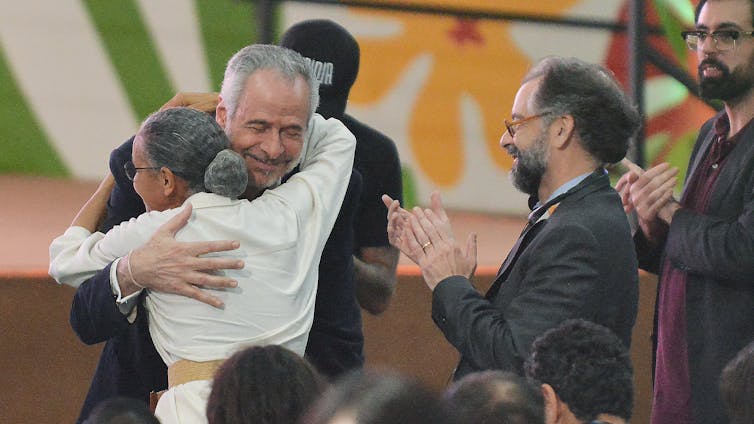
Antonio Scorza/COP30, CC BY-NC-ND


Jacqueline Peel, The University of Melbourne

It wasn’t a comfortable process for the tens of thousands of delegates trying to hash out progress on climate change on the edge of the Amazon in Belém, Brazil. I experienced the challenges of the United Nations COP30 climate talks firsthand.

Delegates were hot and sweaty. Tech and aircon didn’t always work. Both flood and fire disrupted negotiations over the fortnight of negotiations. It drove home how climate change feels. But despite the discomfort, some progress was made.

Brazilian President Luiz Inácio Lula da Silva dubbed it the “COP of Truth”. Delegates did not shy away from the urgency of the moment as climate change intensifies and emissions continue to climb.

Ahead of the talks, many feared global political headwinds and the United States’ departure from the Paris Agreement would undermine this year’s talks. The fact that nearly 60,000 delegates attended these talks – the second highest ever – shows this isn’t the case.

Progress was made on funding climate finance and adaptation to the changes already emerging. But efforts on ending reliance on fossil fuels faltered in the face of strong resistance by fossil fuel powers. Much progress in Belém happened outside the main talks.

So what did COP30 deliver?

At one stage it looked like COP30 might crack the hardest nut in climate policy – reaching agreement on phasing out fossil fuels. Nations agreed two years ago that it was necessary to move away from fossil fuels. But no plan had yet been devised to get there.

Brazil had a plan: build support for a roadmap to phase out fossil fuels, championed by President Lula and pushed strongly by Environment Minister Marina Silva. It drew support from more than 80 countries, including major fossil fuel exporters such as Norway and Australia. Anticipating pushback, Brazil worked to boost support outside the main talks before bringing the plan in.

It didn’t work. By the end of COP30, all mention of a fossil fuel roadmap had been scrubbed from the text of the final outcomes, following fierce pushback from countries such as Russia, Saudi Arabia and India and many emerging economies.

Instead, countries agreed to launch “the Global Implementation Accelerator […] to keep 1.5°C within reach” and “taking into account” previous COP decisions. This initiative will be shepherded by the Brazilian COP30 Presidency and the leaders of next year’s COP31 talks, Turkey and Australia.

President Lula vowed to continue advocating for a fossil fuel roadmap at the G20. Colombia and the Netherlands will hold a conference on fossil fuel phaseout in April 2026. The COP30 decision text also makes reference to a “high-level event in 2026” which could take place in the Pacific. Without blockers of consensus at these meetings, a coalition of willing countries could make real progress in setting timelines and exchanging policy ideas for fossil fuel phase-out.

woman standing at podium.
Brazil’s Environment Minister Marina Silva emerged as a quiet force working to build support for the first roadmap to phase out fossil fuel extraction and use. Aline Massuca/COP30, CC BY-NC-ND

The decision to develop a just transition mechanism was welcomed as a win for workers and communities. The new mechanism’s purpose will be to increase international cooperation, technical assistance, capacity-building and knowledge-sharing as countries shift towards a low carbon global economy.

Efforts to boost financing for climate adaptation bogged down, reflecting the trade-offs over fossil fuels.

These funds are meant to help nations most exposed to severe climate damage, usually poorer and with low emissions. These nations led the charge for a tripling of climate finance by 2030 from the US$40 billion (A$62 billion) agreed at COP26 four years ago. But the agreed text merely “calls for efforts to at least triple adaptation finance by 2035”, which pushes out the timeframe and has no funding baseline.

Funding for tropical forests

One of Brazil’s own initiatives, the Tropical Forest Facility, achieved greater success, securing US$9.5 billion (A$14.7 billion) in funding pledges – a COP record.

The trust fund for rainforests is designed to provide resources to arrest global deforestation and protect Indigenous lands, including in the Amazon’s vital carbon sink.

Support for a roadmap towards ending deforestation secured 92 backers.

The success of these deforestation initiatives points to the effectiveness of the COP’s Action Agenda, aimed at spurring on climate action outside formal negotiations and including commitments from business, investors and civil society. As formal negotiations bog down, these bypasses may end up replacing negotiations in driving progress.

American absence

Ahead of COP30, analysts feared the ongoing attacks on climate action by the Trump administration would undermine the international negotiations.

COP30 was the first climate summit without a US government delegation. At first, the absence came as a relief.

But by summit’s end, the disappearance of the world’s biggest historical emitter and largest economy from negotiations had taken its toll.

Developing countries from the African group of negotiators argued better metrics and plans would be meaningless without funding to implement them. Traditionally, the US has been a major funder. No longer.

The US decision to turn its back on climate action created a subdued atmosphere. New finance pledges were broadly underwhelming, likely due to the dampening effect of the US retreat.

people taking photos of a pavilion at global talks.
China’s negotiators focused most of their energy in pushing back on European trade measures targeting high-emissions products. Antonio Scorza/COP30, CC BY-NC-ND

Early on, many hoped renewables and clean tech giant China might fill the leadership void. China’s clean tech exports last year were enough to cut overseas emissions by 1%. The huge industrial power produces almost 32% of the world’s carbon emissions. These emissions have plateaued, in turn suggesting global emissions may now have peaked.

But China showed reluctance to take up the mantle, preferring to remain focused on its own domestic energy transition. Chinese negotiators spent most of their energy pushing back against new European trade measures targeting emissions-intensive production.

It was left to some of the smallest nations, Indigenous peoples and civil society to lead calls for sticking to the science, ramping up urgency and accelerating the rollout of solutions. An estimated 70,000 people marched in the streets of Belém, staging a mock funeral for fossil fuels. It was an important affirmation of widespread public support for climate action.

What legacy?

As the UN’s climate Executive Secretary Simon Stiell said midway through COP30, nations had to “give a little to get a lot”.

Many countries will be reflecting they gave a lot but got very little. The biggest winners were, yet again, the world’s petrostates who successfully frustrated attempts to address fossil fuels.

Questions will inevitably be asked over whether these consensus-based talks are fit for purpose, given they can be gamed by blockers.

For many, COP30 will be regarded as a failure on fossil fuels and addressing major gaps between national pledges to cut emissions and what’s needed to hold warming to 1.5°C.

This is true. But another view would be that these talks made real progress on important areas despite considerable challenges.

Negotiators from 194 countries showed up and continued to talk and work together to tackle the worsening crisis. Nearly half of those countries have shown they’re ready to begin weaning themselves off fossil fuels through their support for the phase-out roadmap. They don’t have to wait for a UN consensus to act. Fossil fuel exporters only have power while other nations buy and rely on their products.

The world’s climate talks are now clearly moving away from arcane negotiations to the pressing real-world challenges of doing the work. In a rapidly warming world, all issues are becoming climate issues.The Conversation

Jacqueline Peel, Professor of Law, The University of Melbourne

This article is republished from The Conversation under a Creative Commons license. Read the original article.

Friday, 7 November 2025

Environment - Climate Change - COP30 - Brazil - Expectations


Geopolitics, backsliding and progress: here’s what to expect at this year’s COP30 global climate talks

The Amazonian city of Belém, Brazil. Ricardo Lima/Getty
Jacqueline Peel, The University of Melbourne

Along with delegates from all over the world, I’ll be heading to the United Nations COP30 climate summit in the Brazilian Amazon city of Belém. Like many others, I’m unsure what to expect.

This year, the summit faces perhaps the greatest headwinds of any in recent history. In the United States, the Trump administration has slashed climate science, cancelled renewable projects, expanded fossil fuel extraction and left the Paris Agreement (again). Trump’s efforts to hamstring climate action have made for extreme geopolitical turbulence, overshadowing the world’s main forum for coordinating climate action – even as the problem worsens.

Last year, average global warming climbed above 1.5°C for the first time. Costly climate-fuelled disasters are multiplying, with severe heatwaves, fires and flooding affecting most continents this year.

Climate talks are never easy. Every nation wants input and many interests clash. Petrostates and big fossil fuel exporters want to keep extraction going, while Pacific states despairingly watch the seas rise. But in the absence of a global government to direct climate policy, these imperfect talks remain the best option for coordinating commitment to meaningful action.

Here’s what to keep an eye on this year.

A smaller-than-usual COP?

A persistent criticism of the annual climate summits is that they have become too big and unwieldy – more a trade show and playground for fossil fuel lobbyists than an effective forum for multilateral diplomacy and action on climate change. One solution is to deliberately make these talks smaller.

The Belém conference may end up having a smaller number of delegates, though not by design so much as logistical headaches.

Brazilian President Luiz Inácio Lula da Silva backed the decision to invite the world to the Amazon to display how vital the massive rainforest is as a carbon sink. But Belém’s remote location on the northeast coast, limited infrastructure and shortage of hotels have seen prices soar, putting the conference out of reach for smaller nations, including some of the most vulnerable. These constraints could undermine the inclusive “Mutirão” (collective effort on climate change) sought by organisers.

person dressed as a folklore figure at the Brazil climate talks with large ship in background.


Many delegates will sleep on ships at the Belem climate talks. Pictured is Curupira, a figure from Brazilian folklore and the COP30 mascot. Gabriel Della Giustina/COP30, CC BY-NC-ND

Show me the money

Climate finance is a perennial issue at COP meetings. These funding pledges by rich countries are intended to help poorer countries reduce emissions, adapt to climate change or recover from climate disasters. Poorer countries have long called for more funding, given rich countries have done vastly more damage to the climate.

At COP29 in Baku, Azerbaijan last year, a new climate finance goal was set for US$300 billion (~A$460 billion) to be raised annually by developed countries by 2035, with the goal of reaching $US1.3 trillion (~A$2 trillion) in funding from both government and private sources over the same period.

To deliver the second goal, negotiators laid out a “Baku to Belém” roadmap. The details are due to be finalised at COP30. But with the US walking away from climate action and the European Union wavering, many eyes will be on China and whether it will step into the climate leadership vacuum left by developed countries. The EU has only just reached agreement on a 2040 emissions reduction target and an “indicative” cut for 2035.

Climate finance will be the priority for many countries, as worsening disasters such as Hurricane Melissa in Jamaica and Typhoon Kalmaegi in the Philippines once again demonstrate the enormous human and financial cost of climate change.

The latest UN assessment indicates the need for this funding is outpacing flows by 12–14 times. In Belém, poorer countries will be hoping to land agreement on greater finance and support for adaptation. Work on a global set of indicators to track progress on adaptation – including finance – will be key.

Brazilian organisers hope to rally countries around another flagship funding initiative set to launch at COP30. The Tropical Forests Forever Facility would compensate countries for preserving tropical forests, with 20% of funds directed to Indigenous peoples and local communities who protect tropical forest on their lands. If it gets up, this fund could offer a breakthrough in tackling deforestation by flipping the economics in favour of conservation and protecting a huge store of carbon.

2035 climate pledges

Belém was supposed to be a celebration of ambitious new emissions pledges which would keep alive the Paris Agreement goal of holding warming to 1.5°C. Nations were originally due to submit their 2035 pledges (formally known as Nationally Determined Contributions) by February, with an extension given to September after 95 per cent of countries missed the deadline.

When pledges finally arrived in September, they were broadly underwhelming. Only half the world’s emissions were covered by a 2035 pledge, meaning the remaining emissions gap could be very significant. Australia is pledging cuts of 62–70% from 2005 emissions levels.

That’s not to say there’s no progress. A new UN report suggests countries are bending the curve downward on emissions but at a far slower pace than is needed.

How negotiators handle this emissions gap will be a litmus test for whether countries are taking their Paris Agreement obligations seriously.

Rise of the courts

Even as some countries back away from climate action, courts are increasingly stepping into the breach. This year, the International Court of Justice issued a rousing Advisory Opinion on states’ climate obligations under international law, including that national targets have to make an adequate contribution to meeting the Paris Agreement’s temperature goal. The court warned failing to take “appropriate action” to safeguard the climate system from fossil fuel emissions – including from projects carried out by private corporations – may be “an internationally wrongful act”. That is, they could attract international liability.

It will be interesting to see how this ruling affects negotiating positions at COP30 over the fossil fuel phase-out. At COP28 in 2023, nations promised to begin “transitioning away from fossil fuels in energy systems”. If countries fail to progress the phase-out, accountability could instead be delivered via the courts. A new judgement in France found the net zero targets of oil and gas majors amount to greenwashing, while lawsuits aimed at making big carbon polluters liable for climate damage caused by their emissions are in the pipeline.

An Australia/Pacific COP?

A big question to be resolved is whether Australia’s long-running bid to host next year’s COP in Adelaide will get up. The bid to jointly host COP31 with Pacific nations has strong international support, but the rival bidder, Turkey, has not withdrawn.

If consensus is not reached at COP30, the host city would default back to Bonn in Germany, where the UN climate secretariat is based.

Outcome unknown

As climate change worsens, these sprawling, intense meetings may not seem like a solution. But despite headwinds and backsliding, they are essential. The world has made progress on climate change since 2015, due in large part to the Paris Agreement. What’s needed now on its tenth anniversary is a reinfusion of vigour to get the job done.The Conversation

Jacqueline Peel, Professor of Law, The University of Melbourne

This article is republished from The Conversation under a Creative Commons license. Read the original article.

Saturday, 2 August 2025

The next UN Climate Change Conference - COP30 in Brazil

 
The 30th Conference of the Parties (COP) for the United Nations Framework Convention on Climate Change will be hosted by Brazil from 10th to 21st November 2025 in Belem, the capital of the state of Para. The city is located close to the Amazon, a crucial location given the climate change impacts on that crucial ecosystem and life resource.  There has been disquiet in the UN about the venue for COP30 as Belem is regarded as economically poor with limited capacity for dealing with an international conference of the size and scale of the COPs. For example, additional transport routes have had to be constructed for COP30 straining resources in Belem and including road construction in the Amazon itself.

Brazil holds the presidency for COP30 and has called for a course-correction as efforts to address climate change and meet agreed commitments are falling well behind stating: "the world must exponentially scale and speed up efforts to meet the commitments we have made".

The second global stocktake will take place  at COP30 measuring countries progress towards meeting the goals of the Paris Agreement. The first stocktake occured at COP28 and the results were far from reassuring. 

Brazil has proposed an action agenda for COP30 comprising six themes with a total of 30 objectives. The six themes are:
  1. Transitioning Energy, Industry and Transport
  2. Stewarding Forests, Oceans and Biodiversity
  3. Transforming Agriculture and Food Systems
  4. Building Resiliance for Cities, Infrastructure and Water
  5. Fostering Human and Social Development
  6. Cross-cutting issues - Unleashing Enablers and Accelerators, including on Finance, Technology and Capacity Building 
The sheer number of objectives and the wide scale of the themes appear far too ambitious and complex to achieve meaningful results and complete international agreement. Tangible results and concrete international cooperation are now essential given the increasingly dire situation.

The COP30 website can be accessed: COP30 Website