Thursday, 2 July 2026

Astronomy - what makes a star ?


What makes a star a star? A strange ‘in‑between’ celestial object is testing astronomers’ boundaries

Md Redyan Ahmed, University of Sydney

Around 1,350 light years away from Earth is a star called TOI-2155. It’s a little bigger, heavier and hotter than the Sun, and it’s not particularly interesting or unusual in itself.

But orbiting around TOI-2155 is something very interesting indeed: a much smaller object called TOI-2155b, which we only know about by observing the tiny changes in light from the host star when the smaller object passes in front of it.

What is TOI-2155b? A mini-star? A giant planet? Or something in between? I’m glad you asked.

As my collaborators and I write in a recent paper in The Astronomical Journal, we’re not yet sure whether TOI-2155b is quite a star. But it seems to live on the fascinating boundary between a celestial beacon blazing through the heavens and a failed star that never quite ignites sustained hydrogen fusion.

Why stars fail

Stars start out as huge blobs of gas in space – but how big and heavy does a blob of gas have to be before it becomes a star? It sounds like a simple question, but astronomers have debated the answer for decades.

The gravitational pressure inside a star has to be great enough to fuse hydrogen atoms together into helium atoms, and to do it consistently for a long period. This is what creates the intense stream of heat and light that is a star’s signature.

If an object isn’t quite big enough to generate that much pressure – or if fusion doesn’t really kick off properly for some other reason – the gas becomes a kind of “failed star” known as a brown dwarf. These objects are hot early in life, but without sustained hydrogen fusion they gradually cool, giving off a dim infrared glow.

To learn more about why some blobs become stars and others become brown dwarfs, astrophysicists look for objects in the intermediate zone – the heaviest brown dwarfs and the lightest of stars.

That’s where TOI-2155b comes in. Weighing in at around 80.6 times the mass of Jupiter, it sits right on the theoretical boundary.

Where do stars end and brown dwarfs begin?

Using observations from NASA’s Transiting Exoplanet Survey Satellite (TESS) together with ground-based telescopes around the world, we determined the size and mass of TOI-2155b precisely. Although it is almost the same size as Jupiter, it is around 80 times more massive.

You might expect there to be a precise mass at which an object suddenly becomes a star. But as so often happens, in real life there is no clean line.

Diagram showing planets, brown dwarfs and stars
The standard theory suggests the difference between planets, brown dwarfs and stars all comes down to mass – but it’s not quite that simple. NASA/JPL-Caltech

Astronomers have traditionally placed the boundary near 75–80 times the mass of Jupiter. But modern theoretical models show the transition depends on other factors as well as mass.

An object’s age, its chemical composition, and even its atmospheric properties influence whether it can have sustained hydrogen fusion. That is why astronomers still disagree about exactly where the mass boundary between brown dwarfs and stars should be drawn.

A remarkably rare object

TOI-2155b may be one of the most massive brown dwarfs ever discovered – or one of the lightest stars. There are very few known objects in this transition zone of mass, and TOI-2155b will help us better understand the boundary.

Astronomy often learns the most from its rarest objects.

However, one object alone cannot determine the exact location of that boundary. Only once we have discovered and precisely studied more objects in this transition region can we refine our models to understand the conditions that allow a star to ignite and burn for billions of years – the process that has made the universe as we know it.The Conversation

Md Redyan Ahmed, PhD Candidate in Astrophysics, University of Sydney

This article is republished from The Conversation under a Creative Commons license. Read the original article.

Monday, 29 June 2026

Climate change destroys underwater forests


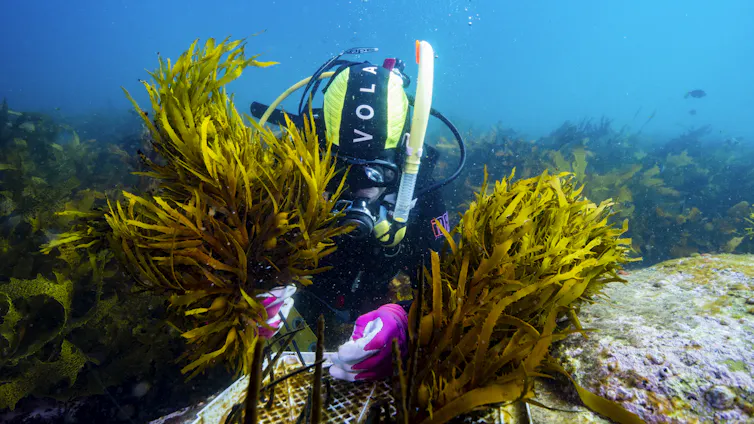
Heat is destroying Australia’s underwater forests. Seaweed biobanks could help save them

Tom Burd, CC BY-NC-ND
Catalina A. Musrri, University of Sydney and Georgina Wood, Flinders University

Australia’s Great Southern Reef is built not by coral but by seaweed. The seaweed forests on these rocky reefs stretch more than 8,000 kilometres around southern Australia.

Amid the swaying fronds live seadragons, rock lobsters, giant cuttlefish and southern blue devils. The reef is home to more than 1,500 seaweed species and contributes billions to the economy each year.

But these remarkable cold water forests face a worsening threat. The ocean is getting steadily warmer, pushing seaweed species outside their survival zone. Much of this damage is done by sudden marine heatwaves, where temperatures spike and remain high for some time. Heatwaves have driven the decline of seaweed forests across the country.

To protect these underwater forests, we need to preserve their genetic diversity. We led the first attempt to cryopreserve (freezing and storing reproductive material at ultra-low temperatures) a key Australian seaweed, crayweed, and found the idea shows promise, though the techniques need to be perfected.

Why does seaweed matter?

Most of us encounter seaweed as a slightly stinky mass spotted when walking along a beach. But underwater, these large algae (not plants) form beautiful forests swaying in the current – some as tall as 30 metres.

Seaweed forests are among the most productive ecosystems on Earth. Like forests on land, they provide habitat, shelter and food for many creatures. They underpin valuable fisheries such as lobster and abalone.

When local populations are wiped out, they take something important with them – genetic diversity. Species with high genetic diversity can better adapt to change. Some populations will be able to tolerate heat better, for instance. But if these populations disappear, their unique genes go with them.

In 2011, an extreme marine heatwave in Western Australia led to two common seaweed species losing an estimated 30 to 65% of their genetic diversity. These losses may mean poorer outcomes in response to intensifying threats.

shovelnose ray sitting on rocky reef, surrounded by seaweed.
Seaweed forests are home to many species, such as this shovelnose ray in Australia’s first named seaweed forest, Yanggaa, at Coogee Beach in New South Wales. Operation Crayweed, CC BY-NC-ND

Consider the crayweed

Golden-brown crayweed (Phyllospora comosa) once formed extensive underwater forests along Sydney’s coastline. Many of these disappeared in the 1980s, likely due to sewage pollution. But crayweed didn’t return even after pollution levels fell.

Over the past 14 years, scientists and divers have replanted this species around Sydney through Operation Crayweed. Their work has led to the return of self-sustaining populations, including Australia’s first named seaweed forest – Yanggaa forest at Coogee Beach.

But restoration may not be enough in a rapidly warming ocean. Our research shows separate crayweed populations harbour unique genetic diversity – and some individuals appear better equipped to tolerate heat. It may make sense to plant germlings (baby seaweed) from these individuals in vulnerable populations to boost their chances of survival.

A scientist holding a liquid nitrogen hose and pumping it into a container.
We tested storing crayweed reproductive material at very low temperatures using cryopreservation in liquid nitrogen. Rachel Venhuizen, CC BY-NC-ND

Of seed banks, biobanks and cryopreservation

For decades, thousands of land-based plant species have had their genetic diversity preserved through seed banks. The seeds stored are sleeping but still alive. If planted in the right conditions, they will grow.

Some kelp species can also be kept alive in biobanks – not as seeds, but in a microscopic form (gametophytes) able to be kept alive in laboratories for years. Current kelp collections support research, aquaculture and restoration programs around the world, including in Australia.

These banks are important. But they won’t be enough. The majority of seaweed species dominating the Great Southern Reef are known as fucoids. Unlike true kelps, fucoids don’t have this microscopic life stage – they release sperm and eggs directly into seawater that fertilise and form germlings. This makes species such as crayweed, bull kelp (Durvillaea potatorum), Cystophora sp. and Scytothalia dorycarpa more challenging to conserve.

It is possible to bank species which rely on sexual reproduction, such as humans, cows, corals and fucoids. Assisted reproduction methods such as IVF rely on cryopreservation: storing reproductive material, tissue or early life stages at ultra-low temperatures (around –196 °C) so it remains viable for future use.

Our recent research tested whether frozen crayweed sperm and germlings were viable after being thawed. We found the sperm did well, but the germlings did not (for now). Our ultimate goal is to develop proven methods able to work across a broader range of Australian seaweed species.

Preserving the genetic diversity of seaweed species would mean these genes can be drawn on to bring them back. This buys valuable time and keeps the door open for new methods such as assisted gene flow, where individuals from better-adapted populations are used to help vulnerable ones cope with warmer conditions.

Time for seaweed biobanks?

Australia already has an impressive algal culture collection and is a global leader in coral cryobanking.

Even so, it will take real work to develop methods of preserving the forest-forming seaweed species that rely on sexual reproduction. We need to learn which populations contain unique or threatened genetic diversity, understand which are most vulnerable to climate change and improve freezing and recovery techniques.

Choosing which species and populations should be done alongside Indigenous custodians, governments, conservation organisations and local communities.

Cryobanking doesn’t solve climate change or replace the need to protect habitat. It’s an insurance policy for biodiversity. Much has already been lost. Preserving the remaining genetic diversity of our seaweed forests may well be critical to the survival of the Great Southern Reef.The Conversation

Catalina A. Musrri, Postdoctoral Research Fellow in Marine Biology, University of Sydney and Georgina Wood, ARC Research Fellow in Marine Science, Flinders University

This article is republished from The Conversation under a Creative Commons license. Read the original article.

Saturday, 27 June 2026

Mars - terraforming quiz and interactive game

Mars from Space (c) ESA

Astronomers and scientists, not to mention science fiction writers, have often considered whether Mars can be colonised by human beings. The nearest planet to Earth, Mars has a thin atmosphere, desolate landscape and a higher radiation exposure yet still the allure of having a colony persists.

The renowned science journal, Nature, has devised an interactive game to see how terraforming Mars might work. The game is short, easy to do and consists of interactive multi-choice questions. Access to the game can be found at this hyperlink: nature.com -terriform mars game

Sydney Film Festival 2026 - Film Review - The Rays and Shadows

ChatGPT
The Rays and Shadows is set in the immediate period before and during World War II and is based on the true life story of newspaper publisher, Jean Luchaire and his daughter, Corinne, a French film actress. Luchaire supports peace between France and Germany and becomes a collaborator with the German occupying forces and a member of the Vichy Government until 1945.

The plot: Jean Luchaire (Jean Dujardin) is a failing newspaper publisher who co-sponsors a peace movement with Germany. He befriends Francophile German citizen, Otto Abetz who secures additional finance for Luchaire's newpaper from German Government sources. When WWII breaks out, Abetz is appointed as the Nazi German Ambassador to the Vichy Government and continues supporting Luchaire. Luchaire's daugher, Corrine (Nastya Golubeva) is a rising star in French cinema but as the war looms her opportunities decline due to a diagnosis of tuberculosis and she increasingly becomes dependent on German support for her career. Both she and her father benefit not only from the German occupation of France but from a range of black market opportunities, embassy parties and access to the Nazi administration. The film portrays the seduction of collaboration, power and privilege extensively. After the war, Jean Luchaire, was placed on trial by the French and executed. His daughter Corrine was found guilty of collaboration but deemed to have committed a lower level offence and she spent her final years under the sentence of indignite nationale before dying from tuberculosis in 1950. 

Nastya Golubeva in The Rays and Shadows

The film is expertly photographed with capable actors however with a screening time of over three hours, the film is too long and would have benefitted from sharper editing. Too many scenes are ancillary to the story and neither essential nor useful. Described as a 'sweeping drama', film director and screenwriter Xavier Giannoli could have wielded the red pen on the script and editing room 'scissors' before release.

Run time: 199 minutes
Rating [/10]: 6 out of 10
Recommended for cinema viewing: No. Recommended for streaming or subscription service viewing

Thursday, 25 June 2026

Sydney Film Festival 2026 - Film Review - Sheep in the box

ChatGPT
Best described as sweet but very slow, this film by Japanese screenwriter and film director Hirokazu Kore-eda falls within the sci-fi genre covering the very topical issue of AI and robotics in a very human context.

Plot: Set in the near future, couple Otone (Haruka Ayase) and her husband Kensuke (Daigo Yamamoto) are mourning their young son who has died in mysterious circumstances. Turning to an AI/Robotics company, REbirth, they are supplied with a state-of-the-art humanoid replicantion of their lost son, Kakeru (Rimu Kuwaki). Although initially the humanoid has limited communication, over time this interaction improves despite Kensuke's dismissive references to a 'Tamagotchi' or a 'Roomba'. The couple are astonished to discover that memories of their past life with their son are surfacing from the humanoid. Memories that it should not have.

Rimu Kuwaki in Sheep in the box

The film is very slow moving with long scenes containing little activity or dialogue. It's non violent film generally and has elements of sentimentality especially when the humanoid Kakeru links up with other humanoid and human orphan children to depart for a special forest to make a home for themselves. Acting and cinematography meets the professional standard in film-making and its a pleasurable viewing experience although the film is too long at 126 minutes.

Run time: 126 minutes
Rating [/10]: 7 out of 10
Recommended for cinema viewing: Yes

Wednesday, 24 June 2026

Sydney Film Festival 2026 - Film Review - Gentle Monster

Chat GPT
The subject of child abuse and its' impact on a family is the central focus of Gentle Monster

Plotline: Famous concert pianist, Lucy (Lea Sedoux), her husband Philip (Laurence Rupp) and their young son move to the countryside as Philip is suffering increasingly from burnout. They settle in a country house outside of Munich into a calmer life and all seems idyllic until one morning the police arrive and seize Philip's electronic equipment and remove him for questioning. As the film progresses, Lucy questions if she knows the man she married and moment by moment comes to the realisation that Philip is guilty of trafficking child pornography for money. Lucy seeks a way forward to protect her son and herself while Philip continues to try and save the marriage. She initially supports her husband but following his confession to her and mounting evidence including that photos of their own son had been used, it becomes clear to her that the only option is to leave.

The film is tastefully photographed and veers away from sensationalism with measured performances from the cast. The film does have some structural problems. The flashbacks used to portray images of the previous happy family life and Lucy's various concert performances are not seamless but rather muddled, distracting and seemingly dropped into the film. There are various substrata tensions with various characters alluding to other personal issues that appear unnecessary for the overall story itself. 

Lea Seydoux superbly portrays a woman experiencing a range of emotions from shock, devastation, anger to optimism. Catherine Deneuve is cast as her emotionally distant mother who makes it plain that she never approved of her daughter's marriage but provides her with limited but useful support. Writer and film director Marie Kreutzer has created a powerful and morally complex film traversing a highly emotive topic.

Gentle Monster - Lea Seydoux (r)


Run time: 112 minutes
Rating [/10]: 8 out of 10
Recommended for cinema viewing: Yes