Sunday, 6 September 2026

Climate Change - a monster El Niño event for the world in 2026

A record‑shattering El Niño is almost here. Here’s what that means for the world’s weather

A dry flat dusty paddock with a solitary small tree.
Laura Symes/Getty
Mandy Freund, The University of Melbourne

The world is bracing for the strongest El Niño in history.

The United Nations has made the grim prediction that our planet now sits in the “danger zone” of extreme weather. That’s based on data suggesting the current El Niño will break all previous records.

El Niño is a naturally occurring weather phenomenon that drives variations in temperature and winds across the Pacific Ocean and influences weather around the globe.

Globally, we have endured many strong El Niños in the past, but none have been as exceptionally strong and developed as quick as this one.

So what’s behind this potentially record-breaking El Niño? And how might it affect weather across the globe?

An exceptional El Niño

Scientists track El Niño activity using temperature data from the tropical Pacific Ocean near the equator. Historically, this involved measuring how high or low temperatures were across this region.

However, scientists and weather organisations – including Australia’s Bureau of Meteorology – now use a relative index. Instead of simply measuring temperatures, this relative index accounts for any background warming due to climate change. This makes it much easier for scientists to identify how intense an El Niño is in a warming climate.

The current El Niño stands out for two main reasons.

Extra early

El Niño typically peaks in the period between November and January, but this one is already unusually warm this early in the season and is yet to peak during summer.

Extra hot

Recent data shows the relative index for August were 2.3°C above average, stronger compared to other El Niño years. In Australia, El Niño years tend to coincide with hotter and drier conditions. However, every El Niño is different and can lead to different impacts. However, this El Niño will lead to record breaking global temperatures in 2027.
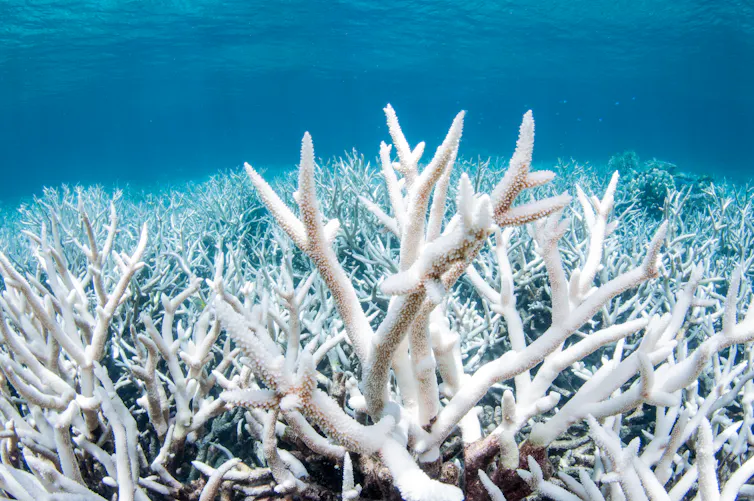
White bleached coral in a blue sea.
Bleached coral on the Great Barrier Reef outside Cairns. El Nino leads to warmer ocean temperatures that can trigger bleaching. Brett Munroe Garner/Getty

How is it affecting the world’s weather?

This historic El Niño is already altering weather around the globe.

We see its most direct and severe impacts in countries surrounding the Pacific Ocean. Indonesia, for example, just this month was battling massive wildfires. Scientists understand the current El Nino is a major driver of these increasingly fierce blazes.

El Niño is also reshaping how and where cyclones form. Satellite pictures reveal there are currently four active tropical cyclones in the Pacific, from near Japan to as far away as Hawaii. This is extremely unusual. El Niño typically boosts cyclone activity in the eastern and central Pacific by carrying warmer water to those regions. Usually we only see one or two such cyclones.

In Australia, we are slightly more removed from the effects of El Niño. However, we can expect to feel its presence more strongly as we head into spring.

The Bureau of Meteorology’s seasonal forecast suggests Australia has so far had a textbook response to El Niño. Temperatures are rising – up to an unseasonable 37°C this week in parts of northern Australia – and conditions are getting drier. Much of eastern and central Australia can expect an unusually dry spring and summer, potentially heightening bushfire risk.

However, a record-breaking El Niño will not necesssarily trigger catastrophic bushfires in Australia. Consider three of the last strong El Niño we’ve experienced. In 1982, a robust El Niño coincided with drought-like conditions. In contrast, during the El Niño years of 1997–98 and 2015–16, some parts of Australia received drenching rain while other regions barely registered any moisture.

What may lie ahead

The intensifying El Niño will likely exacerbate the consequences of climate change.

As El Niño strengthens, countries around the world will be forced to grapple with increasingly extreme weather. Tragically, the most disadvantaged will be the hardest hit, with nearly 50 million people in vulnerable communities likely to be pushed into acute hunger. Farmers across the globe face more unpredictable weather, from crop-destroying floods in South America to severe drought in parts of Africa.

To protect the world’s people and ecosystems, governments must invest in robust research. We urgently need more modelling capability to identify which regions will be worst affected by the strengthening El Niño. This is particularly true for Australia, where a lack of understanding of how climate change on top of a strong El Niño will affect local conditions.

This record-shattering El Niño is already compounding the destructive effects of climate change. But it may be just the catalyst we need to finally abandon fossil fuels and curb our world-warming emissions.The Conversation

Mandy Freund, Lecturer, Climate Science Geography, The University of Melbourne

This article is republished from The Conversation under a Creative Commons license. Read the original article.

Wednesday, 2 September 2026

Artificial Intelligence - 12 most widely used AI systems in 2026


Artificial intelligence (AI) systems vary widely in terms of capability, users and mixed integration with other platforms. The media and the industry itself are open to a level of hype and promotion, making comparisons between systems very difficult. The list below provides a simple summary of the main 12 AI systems in use today with whatever level of information that can be gleaned from various sources with large data gaps. There are other smaller models such as Mistral, GLM and Cohere Command which would be listed below the top 12. Many AI models are now China-based rather than in the West.

The Large Language Models (LLMs) and products are -

  1. ChatGPT (OpenAI): approx 1 billion active weekly users and the largest standalone AI assistant at present. 
  2. Llama 4 (Meta AI): 1.2 billion monthly active users across Meta's apps. Mostly this AI is embedded in WhatsApp/Instagram/Messenger rather than as a standalone chat model.
  3. Gemini (Google): around 950 million active monthly users on the standalone app. Separately, Gemini powered AI overviews reach over 2 billion monthly users through integration with Google Search.
  4. Microsoft Copilot: (GPT based + Microsoft) around 420 million monthly active users across all operating systems. This is expanding to Copilot being bundled with Microsoft 365 and operating systems.
  5. DonBao (Byte Dance): approx 260 million monthly active users. This is an increase of 300% from 2025. This is China's top consumer AI app. 
  6. Ernie Bot (Baidu): Monthly active users has passed 200 million however it is tied to Baidu Search.
  7. DeepSeek (Deepseek): around 130 million users at the end of 2025. Majority of users are located in China although the AI model has a broad global fooprint.
  8. Qwen (Alibaba): This AI model has now exceeded 100 million active monthly users and has a strong presence in China and in the open-weight AI community.
  9. Claude (Anthropic): estimates on users vary widely depending on the source and method of estimation. The range is between 70 and 250 million users per month. This is the fastest growing Western AI assistant with a year-on-year growth of a staggering 855%.
  10. Perplexity: approx 45 million monthly active users. This model is predominantly an AI first search and answer engine rather than an LLM chat system.
  11. Grok (xAI): No reliable standalone figure as this AI model is often connected via X's social media platform which has hundreds of millions of users. Grok can be used as a standalone model without using X. 
  12. Kimi (Moonshot AI): a more recent AI model launched this year and still gaining traction. A Chinese AI app it is significantly smaller than the other AI models and its number of users is only in the tens of millions in China.
A later blog article will cover ranking by capability of AI systems.

Tuesday, 1 September 2026

Environment - Climate change - large companies see a hotter world as the reality

The fact that some of Australia's largest companies are planning for a climate that is 2C higher than the industrial baseline should send a strong message of the precarious situation that the world now occupies. Regardless of climate change deniers or governments that fail to address the climate crisis, large corporates have assessed the situation and arrived at a devastating conclusion. This article provides the detail - 

Some of Australia’s biggest companies are planning for an unbearable climate future

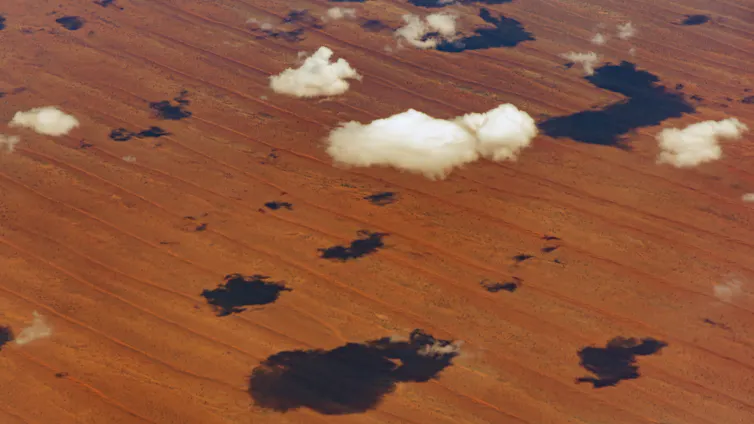
An aerial photo of the red Australian desert.
Andrew Merry/Getty
Jacqueline Peel, The University of Melbourne; Nina Araneta-Alana, The University of Melbourne, and Suzanne Varrall, The University of Melbourne

Even as unprecedented fires and heatwaves rage across Europe, scientists track the retreat of Antarctic sea ice and a supercharged El Niño system heads our way, Australia’s largest companies are forecasting business-as-usual in a much hotter world.

Last year, Australia introduced mandatory company climate reporting. They must now disclose the climate “risks and opportunities” that may affect their prospects.

Several of Australia’s biggest energy and resource companies have now published new sustainability reports as part of annual financial reporting.

Their disclosures reveal the climate future they are planning for, and whether this is aligned with international science-based targets such as the Paris Agreement’s 1.5°C warming threshold.

What we’re seeing is alarming.

Companies planning for an unbearable future

Most of these reports indicate big companies are developing strategies on a climate change “base case” – a representation of what they consider most likely to happen – of more than 2°C of warming. The future temperature rise they’re planning for is one scientists say would deliver an unbearably hot planet.

Some of Australia’s largest miners have followed this approach. Both Rio Tinto and BHP expect global temperature increases of more than 2°C by the end of the century.

Not every company reveals the increase in global temperature they are planning for. But even if they don’t, their disclosures show they’re not expecting temperatures to hold to 1.5°C.

Energy companies AGL and Origin Energy both express confidence their strategies and business models will remain robust, even if temperatures accelerate beyond 2.6°C warming. This increase would put the Australian economy, environment and community at severe risk.

Mining machinery suspended above a red pile of iron ore.
The assumption that business-as-usual will be possible in a hotter world is out of step with the latest science. Cuhrig/Getty

Companies hold power

Companies often argue that governments are responsible for creating policy to address global warming. But this underestimates the power corporate leaders hold to shape Australia’s shared climate future through financial decisions.

For example, mining giant BHP expects demand for steelmaking coal to remain robust for decades, with customers from China, India and Southeast Asia. This underpins the valuation of its major export commodities, and appears to justify the lack of plans to scale down steelmaking coal production. However, this assumption sits uneasily with the fact these same countries have their own net-zero targets.

Similarly, Rio Tinto confirms “no portfolio adjustments” are made to its future production plans. Its central case estimate of 2.1–2.3°C of warming by 2100 assumes developing countries will miss or delay their stated net-zero targets, underwriting business-as-usual production for the company.

Disclosures out of step with science

However, the assumption that business-as-usual will be possible in a hotter world is out of step with the latest science. The Paris Agreement’s temperature goal was set in 2015 based on exhaustive scientific assessments that warming of more than 2°C would be dangerous, and limiting warming to 1.5°C was necessary to minimise climate risks.

Scientific knowledge about how much global warming is “safe” has exponentially increased. It reemphasises the need to keep to 1.5°C with “limited overshoot”. This means we can only exceed 1.5°C temporarily, and simultaneously need to be working to bring temperatures back down. Only then will we minimise irreversible changes such as sea level rise, the disappearance of coral reefs or vast sea ice loss at the poles.

Scientific best estimates find we can’t go over 1.5°C by more than 0.1–0.3°C (a “peak temperature” of 1.6–1.8°C) and still return warming to safe levels. Even then, the longer we stay above 1.5°C and the extent to which we exceed this threshold, the more devastating the outcome.

Is this legal?

Legally, there’s no issue with companies using a base case for planning that exceeds 2°C of warming. But this approach isn’t in line with Australia’s broader international legal obligations. Companies will likely face increased investor scrutiny or reputational blowback when they walk back climate commitments.

In July 2025, the world’s highest court, the International Court of Justice (ICJ), confirmed 1.5°C is the temperature limit countries are aiming for. To meet their Paris Agreement promises, governments — including Australia — have to show the most ambitious action the country can realistically take to help keep warming under 1.5°C. Australia’s latest plan for a 62–70% emissions cut from 2005 levels was submitted in September 2025.

The court confirmed the Paris Agreement also requires governments to take action at home to cut emissions in line with the 1.5°C goal — including introducing rules for businesses operating in their countries. To follow international law, the Australian government needs to use every tool available to regulate the emissions of big companies, based on the best available science. Countries that don’t comply could be sued before the ICJ and ordered to pay compensation to other nations.

What about Australia’s climate policy?

Big companies in Australia contribute more than 30% of our domestic emissions. If we also include emissions from the fossil fuels some of these companies produce, it raises Australia’s global carbon footprint to around 4.5% of global fossil carbon dioxide emissions, second only to Russia. Making sure big companies do their bit to reduce emissions is essential for Australia to meet its climate targets.

This year, Australia is the “President of Negotiations” for COP31. This is an opportunity for Australia to show it’s doing all it can – internationally and in its own backyard – to support compliance with the Paris Agreement and accelerate climate action. From their new disclosures, it doesn’t seem that Australia’s biggest companies have got the memo.The Conversation

Jacqueline Peel, Professor of Law, The University of Melbourne; Nina Araneta-Alana, Research fellow, Laureate Program on Global Corporate Climate Accountability, The University of Melbourne, and Suzanne Varrall, Research Fellow, Laureate Program on Global Corporate Climate Accountability, The University of Melbourne

This article is republished from The Conversation under a Creative Commons license. Read the original article.
International Relations - the threat of old military munitions


Landmines and remnants of war pose a serious threat, and more needs to be done to solve it

Nicole Townsend, UNSW

In recent weeks, wildfires have ravaged Europe amid record-breaking heat and drought. These fires posed an immediate threat to life, forcing the evacuation of over 300,000 people across France, Spain and Portugal. Rivers across Europe have also hit record low water levels.

These developments have highlighted a deadly legacy of past conflict: unexploded bombs and other munitions.

Fires in southern France exposed a previously unidentified cache of 400 French and German shells from the second world war. The ammunition detonated in the heat of the fire, forcing authorities to clear the area before residents could return.

Dropping water levels have also revealed unexploded munitions in the Netherlands, Hungary, and Slovakia.

But fires and drought in Europe are only the latest reminder of an enduring problem that affects millions worldwide.

Explosive remnants of war

Since the first world war, numerous conflicts have ravaged the world, scarring the landscape and littering battlefields with unexploded, abandoned, or otherwise discarded munitions.

Known as explosive remnants of war (ERW), unexploded munitions posed a continuing threat to an estimated 100 million people across 60 countries in 2025.

ERW includes two categories of ordnance. The first is unexploded ordnance (UXO), which are explosive weapons that failed to detonate when they were first deployed. The second is abandoned explosive ordnance (AXO), left behind after a conflict.

The bomb located in Budapest would be classed as an unexploded ordnance, but the cache that detonated amid the Gironde fires appears to fall into the latter category.

Both can include a variety of different munition types, from artillery shells and mortars to grenades and large bombs dropped from aircraft.

Beyond these, landmines are another key explosive contaminant. Landmines are not legally classed as explosive remnants of war because they are deliberately placed during conflict. Yet their extensive use in conflicts globally makes them one of the key explosive contaminants of conflict.

What countries are affected?

After the second world war, European countries worked quickly to remove the landmines that had been put in place during the conflict. In the Netherlands alone, almost 1.4 million mines were cleared between May and November 1945. A similar number were laid by German forces in Denmark, which cleared most of its known minefields by the end of 1945.

As of 2024, the United Kingdom, France, Germany and Denmark are all classed as having completed mine clearance.

Yet globally at least 57 states and other areas remain contaminated by antipersonnel landmines as of October 2025. Many of these are in Africa, the Middle East and Asia.

Among the countries most contaminated by landmines are Afghanistan, Bosnia and Herzegovina, Cambodia, Ethiopia, Iraq, Türkiye, Ukraine, and Western Sahara.

Some were laid during the second world war. This includes minefields placed by both Allied and Axis forces across Algeria, Egypt, Libya, Morocco and Tunisia as part of the North Africa campaign.

Subsequent conflicts also led to extensive minefields being laid. For example, the Vietnam War left nearly 20% of the country contaminated by landmines — an area the size of Tasmania. Decades of conflict left neighbouring Cambodia heavily contaminated, while the Iran-Iraq War left millions of unmarked mines littering the border regions.

Identifying the exact number of countries contaminated by remnants of war is more difficult, with any place that has seen conflict potentially affected. While a country can be deemed free of landmine contamination, it may still be faced with the risk of remnants of war.

In the first world war alone, more than 700 million shells and mortar bombs were fired across the Western Front. An estimated 140 million of these failed to detonate. Each year, Belgian and French farmers routinely collect these and other UXO as part of what is known as the Iron Harvest.

Closer to home, remnants of war from the second world war continue to kill and maim those who encounter them. This includes an Australian killed while handling a mortar shell in the Solomon Islands, with several UXO also located across Darwin in recent years.

Broader implications

According to the Land Mine Monitor, more than 6,000 people were killed or injured by landmines and remnants of war in 2024. Most of these casualties were civilians, with reported casualties spanning no fewer than 52 countries.

The primary danger relates to the detonation of landmines and remnants of war, but the threat they pose goes beyond safety and physical harm.

Studies have shown their presence can restrict access to arable lands, impact soil and water quality, affect food security and diversity, and stunt economic development.

These risks are exacerbated by increasingly frequent and extreme weather and natural disasters driven by climate change. Flood events can relocate and unearth landmines and other remnants, while wildfires can detonate them unexpectedly.

Meanwhile, dropping water levels in rivers and lakes can expose civilians to greater risk of harm by allowing access to contaminated riverbeds that would otherwise be inaccessible.

This is also not a historical issue. Anti-personnel mines are still being used in conflicts such as the war in Ukraine, and several European nations have withdrawn from a treaty designed to prohibit their use.

Military-led operations are working to clear remnants of war in many places, including Pacific island countries. However, these recent events are a reminder of the ongoing threat of remnants of war and landmines, and the need for an integrated approach that recognises and responds to the broader risks and challenges they pose.The Conversation

Nicole Townsend, Lecturer in War Studies, UNSW

This article is republished from The Conversation under a Creative Commons license. Read the original article.

Thursday, 27 August 2026

Dolly Parton 1946 -2026


Jolene, I Will Always Love You and 9 to 5: the genius of Dolly Parton in three songs

Parton on stage in 2025.
Jason Kempin/Getty Images
Wendy Hargreaves, University of Southern Queensland

The world has lost a music legend in Dolly Parton, who has died at 80 after a “brief battle” with cancer. She’s remembered for her twanging country vocals, decades of hit recordings, Grammys, Emmys and a liberal splash of acting.

But the biggest legacy Parton leaves is her songwriting, and three songs define her more than any others.

Jolene, I Will Always Love You and 9 to 5 are not just memorable Parton songs – they are integral to popular music history. They show a skilful musician who knew how to blend the story of lyrics with the drama of music.

Like many songwriters, Parton had things to say. What makes her contribution notable was when her lyrics told a story, and her music matched it.

Jolene

In Jolene, released in 1974, Parton’s lyrics capture the torment of watching your lover flirt with someone else.

It’s a powerful human experience – particularly for women despairing over how easily the next pretty young thing grabs male attention. Parton’s desperate begging for Jolene not to take her man “even though you can” is comfortingly raw and honest.

The song’s lyrics are a startling contrast to the common songwriting themes of the time about finding or losing love – such as The Carpenters’ Close to You (1970), Stevie Wonder’s You are the Sunshine of My Life (1972) and Carole King’s It’s Too Late (1971).

Instead, Jolene sits on the precipice of change, telling a vivid story of how seeing a stunning young woman can make another woman insecure.

Musically, the chords pound out an appropriately bleak minor key, ascending to higher chords with each dramatic call of the name “Jolene”. Accompanying the vocals sits an intriguing, rapid-fire, finger-picking guitar, performed in the recording studio by session musician Chip Young. It keeps an incessant motion that not only adds tension but draws admiration for skilful playing.

I Will Always Love You

I Will Always Love You was also released in 1974 and – remarkably – possibly was written on the same day as Jolene.

This song shows Parton’s ability to once again blend story and music in an excellent pairing. The fear pumping through Jolene is replaced by the grief of farewelling a deep love because, while love endures, it is not always enough of a reason to remain in a relationship.

Again, Parton captures a more sophisticated theme than the excitement and wonder of love. She knows that love can mean letting go.

The lyrics are sparse and the story of “bittersweet memories” is sketchy, but Parton once again nails the essence of human experience. We don’t need the details of what happened to relate with our own painful farewells.

The elongated singing of the word “I” translates almost as a cry of agony in Whitney Houston’s extraordinary cover version.

The chord progression Parton chose to underpin the chorus is one of the most familiar, hit-producing patterns in popular music history. It appears in songs ranging from Stand By Me (1961), Blue Moon (1934), Crocodile Rock (1973) and Every Breath You Take (1983).

But Parton’s usage is unique: the melody and lyrics don’t move with the progression. Instead, the melody holds one single note (with a few embellishments) and lets the chords do the work.

9 to 5

Parton wrote the song 9 to 5 for the movie of the same name in 1980, in which she starred alongside Jane Fonda and Lily Tomlin. It needed to match the vibe to describe the bustle of a working week.

To achieve this, Parton swapped her previously drawn out lyrics of love for the relentless patter describing the morning routine. Here Parton uses clever imperfect rhymes such as matching “kitchen” and “ambition” to sell the story.

The melody in the verse rises with each cluster of words, building the energy like the start of the day she describes. The chorus nails the hook by changing the rhythm, to let the phrase “9 to 5” ring out.

In 9 to 5, Parton moved away from love songs to a feminist theme that belted out the injustices of working tirelessly in a work place like any other employee yet not able to get a “fair promotion”. The description of the “rich man’s game” and how “they never give you credit” highlights workplace inequalities that are sadly still prevalent today. The Conversation

Wendy Hargreaves, Academic in the School of Education and Creative Arts, University of Southern Queensland

This article is republished from The Conversation under a Creative Commons license. Read the original article.

Thursday, 13 August 2026

Climate change - marine heatwaves cooking the oceans

The impact of marine heatwaves is most publicly visible and recognised in the coral reef systems across the planet. Yet the impact is far wider and damaging across the marine environment as this article covers -

Marine heatwaves are cooking our ocean ecosystems – and will only become more common

A graphic of a turtle and a school of fish swimming in the ocean.
Canva, Pixabay, The Conversation, CC BY-NC-SA
Sina Pinter, The University of Western Australia and Nicole L. Jones, The University of Western Australia

You may have heard reports of fish die-offs or seen photos of hauntingly bleached coral.

Those are just two signs a marine heatwave has swept through the sea.

Marine heatwaves happen when the ocean remains abnormally hot for an extended period. While they may be invisible from the shore, their impacts can wreak havoc underwater – killing various kinds of coral, seagrass and fish.

As climate change continues to warm the ocean, marine heatwaves will only become more frequent and severe. While we cannot stop these marine disasters happening, we can work to better understand them and reduce their impacts on vulnerable ocean ecosystems.


CC BY-NC-ND

Our climate is rapidly warming, dramatically reshaping weather around the globe. In this three-part series, we explore a range of emerging climate phenomena and consider how to respond to their destructive effects.


The science of marine heatwaves

Marine heatwaves are naturally occurring weather patterns that can form when hotter water near the surface of the ocean doesn’t mix with cooler water below. This is most common when conditions are hot, dry and windless. However, marine heatwaves can also develop when unusually strong currents carry extra heat from the tropics to colder ocean areas.

To identify a marine heatwave, scientists measure ocean temperatures and compare those observed ocean temperatures with the historical average temperature – the baseline or “normal” temperature of that location at a specific time of year.

Marine heatwaves occur when the ocean is hotter than 90% of historical temperature records. To be considered a heatwave, this abnormal heat must last for at least five consecutive days.

Ocean temperatures vary according to local conditions. Given marine heatwaves are measured in relation to a region’s normal seasonal ocean temperatures, they can happen anywhere and at any time of year. For example, a water temperature of 25°C at Western Australia’s Ningaloo Reef might not seem warm for that tropical area. However, 25°C in the waters around Tasmania would be considered extreme.

Terrestrial heatwaves follow the same logic as marine heatwaves. But a land-based heatwave only needs to last three days to be classified as a heatwave. Minimum night and maximum day temperatures must also be unusually hot.

An underwater disaster

Given marine heatwaves can happen in any part of the ocean, all marine ecosystems are at risk.

However, marine species cope in different ways. Those that are mobile, such as fish, can swim to cooler waters. In contrast, coral, kelp or bottom-dwelling creatures such as sea urchins can’t relocate. This means they are directly impacted by marine heatwaves. For example, they may struggle to reproduce due to heat stress. They also suffer indirect impacts, such as a lack of food if species further down the food chain are wiped out by a marine heatwave.

On land, marine heatwaves can be economically and culturally devastating for coastal communities. They can cost fisheries, aquaculture businesses and tourism operators billions of dollars in lost income. Marine heatwaves may also damage culturally significant sites, as in the case of Shark Bay, a World Heritage-listed marine ecosystem off the WA coast. They may also destroy blue carbon habitats. These are ocean-based habitats, such as mangroves and seagrass, that absorb carbon and help cool the planet.

In February 2011, a massive compound heatwave – where a marine and a terrestrial heatwave happened together – decimated ecosystems across WA. On land, it killed trees and caused the endangered cockatoo population to crash. Beneath the sea, it triggered widespread coral bleaching in the Pilbara, Ningaloo and Houtman Abrolhos Islands regions.

In September 2024, another marine heatwave swept through the waters off the coast of WA lasting several months. It was the state’s longest, largest and most severe marine heatwave ever. It killed about half of the coral in the North West Shelf region.

Most recently, sea surface temperatures have surged during the 2026 European summer, in some places by up to 5°C higher than average. This threatens marine ecosystems across the Mediterranean Sea, North Sea and Baltic Sea.

Worse under climate change

Marine heatwaves are a natural part of our planet’s variable climate system.

But climate change means they are becoming more common and severe. They are also lasting longer. The ocean’s thermal baseline – or the natural temperature of the ocean – is rising due to climate change. This means any temperature fluctuations compound the effects of this background warming.

Other climate drivers, including the El Niño and La Niña climate patterns, can also intensify marine heatwaves. In Australia, El Niño typically warms the waters off the east coast, heightening the risk of severe marine heatwaves there. La Niña tends to push warm water towards the west coast, driving extreme ocean temperatures off WA.

However, because of climate change, large-scale climate patterns like El Niño and La Niña are no longer necessary to trigger marine heatwaves. This means even the slightest change in these climate drivers might bring extreme heat to either coast.

Where to from here

To better understand the factors that drive marine heatwaves, we need further research that analyses changes in air and ocean currents. We should also prioritise research investigating the sub-surface ocean. Satellites monitor the surface but many severe marine heatwaves remain hidden underwater, devastating marine life without detection.

The most important step to reduce the impacts of marine heatwaves is to cut greenhouse gas emissions, limiting further ocean warming. At the same time, researchers are exploring other ways to help ecosystems adapt. These include introducing thermal tolerant species to vulnerable regions. Marine cloud brightening, which aims to temporarily reduce ocean heating by making clouds more reflective, is another option being investigated.

We must also invest in modelling to predict when future marine heatwaves may hit. Early warning systems are also vital to ensure fisheries and conservation zones can prepare for these increasingly common underwater disasters.The Conversation

Sina Pinter, PhD Candidate in Ocean Dynamics, The University of Western Australia and Nicole L. Jones, Professor of Physical Oceanography, The University of Western Australia

This article is republished from The Conversation under a Creative Commons license. Read the original article.

Wednesday, 12 August 2026

Climate change - the new terminology of 'climate whiplash'


‘Climate whiplash’ is not simply a buzzword, but a symptom of a warming planet

Composite image of Earth superimposed over views of bushfire and flood
Pexels, Canva, The Conversation, CC BY-NC
Linden Ashcroft, The University of Melbourne

What flashes to mind when you hear the word “whiplash”?

Perhaps you picture someone’s head rocking back and forth during a car crash – a jarring and often painful experience. Climate whiplash is no different.

Scientists use the terms “weather whiplash” and “climate whiplash” to describe dramatic swings between different kinds of extreme weather. And as the world continues to warm, research suggests these whiplash events will only become more common and severe.


CC BY-NC-ND

Our climate is rapidly warming, dramatically reshaping weather around the globe. In this three-part series, we explore a range of emerging climate phenomena and consider how to respond to their destructive effects.


Not just buzzwords

In general, the term weather whiplash refers to abrupt weather changes that happen on a daily to weekly scale. For example, a downpour may immediately follow a heatwave, or temperatures could be freezing one day and baking hot the next.

At the start of 2026, the Otways region in southern Victoria experienced weather whiplash. In the space of two weeks, a huge bushfire gave way to a record-breaking flood and then an historic heatwave.

Climate whiplash is sometimes used to describe these rapid shifts. However, because climate relates to the long-term average of weather, climate whiplash more accurately describes changes on a monthly to annual scale. Another term scientists use is “climate volatility”.

The current drought afflicting the United Kingdom is a prime example of climate whiplash. After an unusually wet start to the year, parts of the UK endured their driest July on record, with farmers struggling to keep their crops and pastures alive.

Researchers and emergency responders are increasingly concerned by “compound disasters”, which include whiplash events. These occur when multiple kinds of extreme weather collide, and can happen at the same place and time or back-to-back. This compounding makes the events much more destructive than any single disaster.

A temperamental country

In Australia, we are all too familiar with both climate and weather whiplash.

From year to year, our rainfall can swing violently between soaking wet and alarmingly dry. In fact, Australia’s precipitation patterns are among the most variable on Earth. This is largely due to temperature seesaws in the nearby Indian and Pacific Oceans that affect weather patterns and moisture availability over Australia.

Parts of Australia are also known for their temperamental temperatures. Melbourne, for example, is famous for cycling through four seasons in one day. This happens most often when hot air from Australia’s arid centre is shoved out of the way by cold air from Antarctica. This air-mass replacement leads to remarkable drops in temperature, otherwise known as a cool change.

Overseas, the United States and continental Europe are other whiplash hotspots, particularly for rapid temperature changes. In these parts of the northern hemisphere, the jet stream that keeps polar air up near the Arctic can wiggle and weaken, allowing freezing temperatures to spill out onto temperate regions.

Are things getting more ‘whiplashy’?

Research reveals whiplash-like weather is increasing in frequency and intensity.

Globally, extreme temperature variability and sudden swings from wet to dry or dry to wet are becoming more frequent and intense.

What’s more, computer simulations reveal these trends will only worsen if we keep heating the planet by adding more greenhouse gases into the atmosphere. A major reason for this is climatic extremes are more dramatic than they were when our planet was cooler. Heatwaves are hotter, heavy rainfall is heavier and droughts are even drier.

Research suggests a warming planet is altering the speed and behaviour of the weather systems that drive these extremes. For example, the polar regions are warming faster than the tropics, particularly in the northern hemisphere. This uneven warming reduces the temperature change between the equator and the poles, which in turn weakens large-scale wind and pressure patterns that are driven by these temperature differences.

Why whiplash matters

Rapidly changing weather places immense strain on our communities, ecosystems and emergency services.

Quick shifts between hot and cold temperatures affect human health and whole economies. Dramatic shifts between wet and dry conditions have been found to damage soil health, increase water contamination and fuel fast-moving bush and wildfires.

The phrases weather and climate whiplash give scientists another way to communicate just how extreme our weather is becoming. They also enable emergency responders and health services to better plan for back-to-back extremes, and communicate with vulnerable communities.

Weather and climate whiplash may sound like buzzwords. But these terms are a visceral expression of a worrying reality: the more we keep burning coal, oil and gas, the more chaotic and dramatic our weather will become. The Conversation

Linden Ashcroft, Senior Lecturer, Climate Science and Science Communication, The University of Melbourne

This article is republished from The Conversation under a Creative Commons license. Read the original article.

Friday, 7 August 2026

Environment - Mangrove swamps are improving despite climate change


The world’s mangrove forests are bouncing back. That’s good news for our coasts and climate

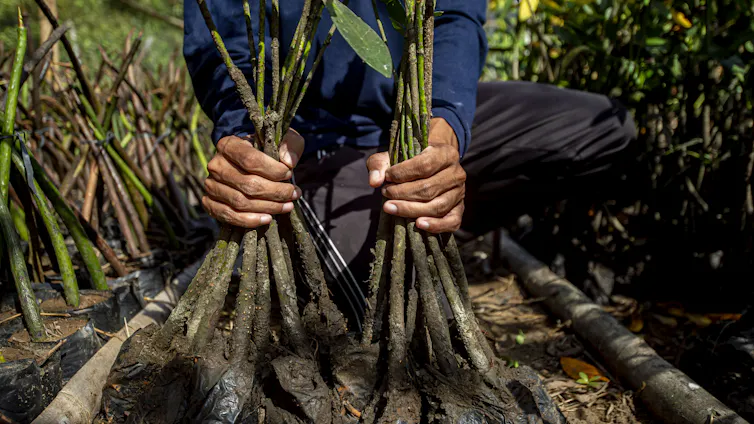
A person planting mangroves in a conservation area in Indonesia.
talented young photographer/Getty
Catherine Lovelock, The University of Queensland

Mangroves are perplexing plants.

They breathe through their roots, appear to stand on stilts and grow best in hot, salty seawater drawn in and out by the tide.

Historically, mangrove forests have been dismissed as inhospitable places to avoid and have been extensively cleared. But these fascinating trees are now gaining attention for how they support biodiversity, store carbon and buffer the effects of storms, cyclones and tsunamis.

Since 1984, scientists have been monitoring the growth and geographical reach of mangrove forests using satellites. And for the first time, these unique ecosystems are expanding at a faster rate than they are declining.

So what’s driving this? And could it help curb climate change?

An aerial view of a beach with a mangrove forest at low tide.
Mangroves thrive in coastal environments, where the tide comes in and out. Vicki Smith

Why mangroves matter

Mangrove forests were long viewed as largely expendable places. Research shows people were quick to convert them into rice paddies, oil palm plantations and aquaculture operations. Some were even used as rubbish tips.

However, mangrove forests are now recognised as a vital part of our coastal environments. They provide habitat for a wealth of plants and animals including fish such as barramundi and giant shovelnose rays, reptiles such as seasnakes and even mammals such as the proboscis monkey and water mouse. They are crucial carbon stores, locking up roughly four times more carbon than other land-based forests. Mangroves can also shelter coastal communities and ecosystems from natural disasters by reducing the risk of flooding and erosion.

From an economic perspective, mangrove forests allow millions of fishers to earn a living as well as supporting commercial fisheries. These forests are also of immense cultural value to First Nations communities, many of which associate mangroves with certain religious gods or cultural practices.

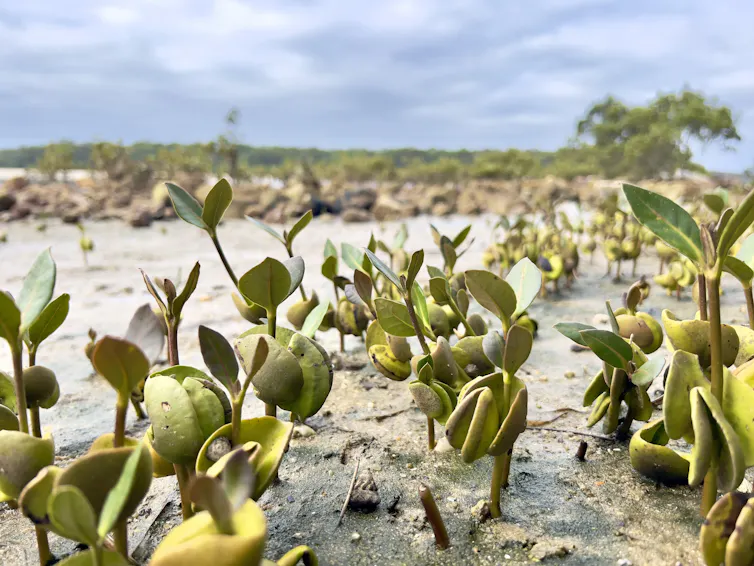
Close-up view of mangrove seedlings growing in a coastal environment.
Mangrove seedlings growing in the tidal flats of the Narrawallee estuary in NSW. lynnebeclu/Getty

Mangroves are bouncing back

For decades, mangrove forests have been systematically cleared and destroyed. Between the 1980s and 2010, we lost more than 12,000 square kilometres – an area the size of Jamaica – of mangroves worldwide. That means there are far fewer mangroves that can trap harmful greenhouse gas emissions and slow the effects of climate change.

However, this trend may be reversing. A recent study analysed four decades of global data documenting the reach and growth of mangroves. It had three key – and somewhat surprising – findings.

Mangroves are rebounding despite climate change

Human-induced climate change is putting immense pressure on our mangrove forests. It is driving more severe and frequent droughts and storms that can damage or kill mangroves. It is also accelerating sea level rise, potentially drowning mangroves.

This study shows the world’s mangrove forests are rebounding, even as our planet rapidly warms. Since 2010, they have expanded by more than 2,000 square kilometres.

Importantly, the reasons for this vary between regions. Before 2010, Myanmar and Indonesia were hot-spots of mangrove loss. But this trend has now stabilised, with policymakers strengthening the laws around mangrove protection following the catastrophic 2004 Indian Ocean tsunami and 2008 cyclone Nargis.

Australia’s mangrove forests are also expanding. However, research suggests this is because mangroves are increasingly growing on floodplains. Rising sea levels allow tides to reach further inland, creating the salty conditions in which mangroves thrive.

In some places – such as where mangroves regenerate in unused aquaculture ponds – this shift inland is positive. In northern Australia, however, it threatens to degrade freshwater ecosystems and is an urgent concern for Traditional Owners.

Mangroves are shifting closer to the sea

This new study suggests mangroves are increasingly growing on newly formed mud flats.

This is counter intuitive because rising sea levels should, in theory, restrict mangrove growth. It may be happening because rivers are carrying soil and sand from deforested areas to the coast, creating new habitat for mangroves.

This demonstrates the resilience of mangrove ecosystems. However, it seems mangroves aren’t regenerating rapidly in the coastal regions where they once thrived – an indicator of successful restoration.

Mangroves are expanding and retreating at the same time

The authors of this study also examined trends in mangrove degradation.

Degradation occurs when mangrove canopies become less dense – a sign they are not as healthy as before. The researchers point to human activities, such as harvesting or pollution, and extreme weather as the main factors driving mangrove degradation.

However, exact causes will differ between regions.

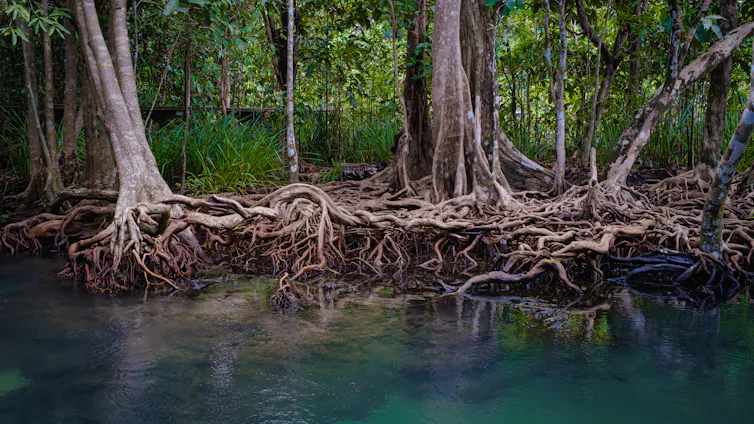
A mangrove forest showing mangrove roots above and below water.
Mangroves have very recognisable roots. Dulyanut Swdp/Getty

More work needed

The expansion of the world’s mangrove forests is promising – and perhaps unexpected – news. However, we can’t be complacent. Current evidence suggests mangrove forests are still thinning overall, putting coastal ecosystems and climate action efforts at risk.

To combat this trend of mangrove degradation, we should support policies that strengthen mangrove protection and restoration.

Organisations such as the Global Mangrove Alliance and Mangrove Breakthrough are also raising the profile of these fascinating ecosystems.

Further research is needed to monitor the varying impacts of climate change on mangroves.The Conversation

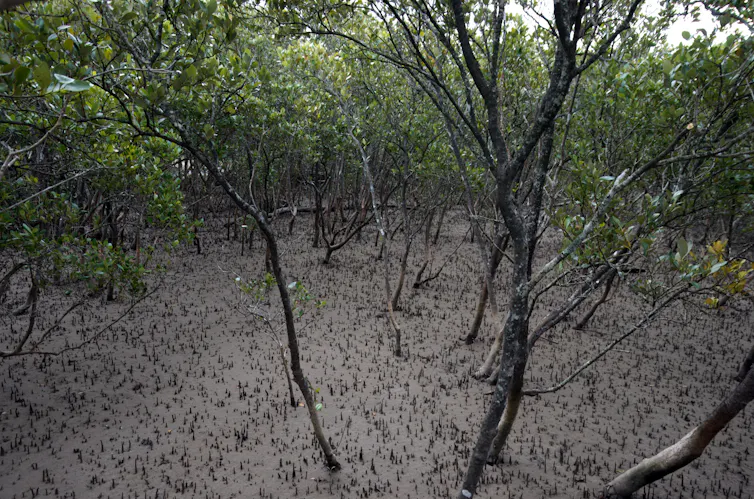
A mangrove forest at low tide.
Mangroves at Cullendulla Creek Nature Reserve, New South Wales at low tide. Simon McGill/Getty

Catherine Lovelock, Professor of Biology, The University of Queensland

This article is republished from The Conversation under a Creative Commons license. Read the original article.