Showing posts with label Environment - Conservation - Fauna - H5N1. Show all posts

Thursday, 6 August 2026

Environment - H5N1 bird flu - survival insights needed


We don’t know how well threatened species fight off bird flu – but we need to

Katherine Belov, University of Sydney and Carolyn Hogg, University of Sydney

Lethal bird flu is now spreading in Australia. This is bad news for many native species.

New federal government analysis suggests close to one in five Australian bird and mammal species is at high, very high or extreme risk. But this risk assessment omits something vital – how genetically well-equipped the species is to fight the virus.

While species such as black swans are likely to be very hard-hit, others such as wild ducks are expected to be less affected. One reason for this is different immune systems – some are more or less able to fight the virus. But there’s a more significant factor – how much variation there is in key immune system genes across populations.

Right now, we don’t have an overview of which threatened species are at highest risk based on this. If we urgently create a national immune-risk map for species at risk, we can act to protect those in most danger.

a black swan standing on lake bank and a wild duck paddling behind.
Black swans are likely to be hard hit by bird flu, unlike wild duck species. The difference lies in their immune systems. irmaferreira/Getty

Why immune gene variations matter

When a virus enters an animal’s body, its immune system must first detect it, then respond. Key immune genes help determine if an animal fights off infection, becomes seriously ill or dies.

Different individuals will have slightly different immune responses based on variations at different immune genes. Some variants will allow an individual to survive the virus, and others won’t. This is why diversity in these genes is critical across the species.

Large wildlife populations often have a wide array of variants at each immune gene. This acts as biological insurance – when a new disease arrives, some individuals will be more able to survive. But if a species becomes threatened and its population falls, it’s likely to lose much of this protective diversity.

If the remaining individuals share similar vulnerabilities, a lethal disease such as H5N1 bird flu could be enough to push the species closer to extinction.

Threatened species are often immunologically fragile

Australia’s wildlife faces threats such as habitat loss, climate change, invasive species, pollution and disease. These threats not only reduce population size – they erode genetic diversity.

Small, fragmented populations may have enough genetic diversity to look viable in the short term. But when a new disease arrives, they may lack the breadth of variation at the immune genes needed to survive the new disease. This is a large, hidden vulnerability.

The orange-bellied parrot is a species that worries us deeply. The small, migratory parrot is one of Australia’s most endangered birds. Just 86 birds are left in the wild, with a few hundred more in captive breeding populations.

Our previous research found the parrot has suffered a dramatic loss of genome-wide diversity over the past century – including variation in immune genes.

If H5N1 infects these parrots, they may lack the immune gene variants needed to buffer the species against severe disease.

small parrot in a large cage in zoo.
Many orange-bellied parrots are being reared in captive breeding programs. Outback to Coast/Getty

Tasmanian devils are similarly at risk. These iconic marsupials have critically low immune gene diversity due to population bottlenecks over the past 5,000 years. This left them vulnerable to the contagious devil facial tumour disease, which saw populations plummet with local declines of 95%, and an estimated 80% decline across Tasmania since the disease arose in the 1990s. Our preprint research shows facial tumour disease is still eroding immune gene diversity.

These scavengers are likely to be exposed to bird flu by eating carcasses, and we know which devil populations eat seabirds. The question will be whether devils have enough immune variation to respond to H5N1.

How a national immune-risk map could help

While we know how some species are likely to respond to the virus, the picture is far from complete.

We could fill in the blanks quickly, using DNA samples held in museums or from animals in zoos to generate genomic data on many more species.

We could then analyse immune gene variation across different populations of each species to measure how diverse they are. This approach could reveal populations that have lost important immune variants and may be particularly vulnerable to bird flu.

The Threatened Species Initiative, has collected this data for more than 125 threatened species. But there are hundreds more threatened animal species for which we have no data and no samples.

If we worked quickly to create a national immune-risk map, wildlife managers could focus surveillance, vaccination and protection efforts on the populations likely to be at most risk.

Importantly, they could establish new captive populations before the virus arrives, using breeding programs to maximise immune fitness and keep inbreeding to a minimum.

This is not science fiction. We led immune-guided conservation work in Tasmanian devils, where data on immune genes shape decisions around breeding. The end result: devil joeys with stronger immune systems.

If we use this approach for more at-risk species, we could better protect wildlife from bird flu and future diseases.

No time to waste

Responses to wildlife diseases are often reactive. Animals start dying in large numbers and then we investigate. This approach will be much too slow to respond to the fast-moving H5N1 strain.

Australia has world-leading wildlife genomics expertise, valuable museum and zoo collections, threatened species recovery programs and growing genome resources.

What’s missing is a coordinated way to translate immune gene data into practical action.

It’s not too late. But we have to act fast to identify species and populations with low immune diversity and roll out measures before irreversible losses occur.The Conversation

Katherine Belov, Professor of Comparative Genomics, University of Sydney and Carolyn Hogg, Professor of Biodiversity & Conservation and Co-Lead, Australasian Wildlife Genomics Group, University of Sydney

This article is republished from The Conversation under a Creative Commons license. Read the original article.

Wednesday, 5 August 2026

Environment - Bird Flu H5N1 - managing the threat


Powerless against bird flu? Not entirely. Here are 8 ways to help protect Australia’s birds and mammals

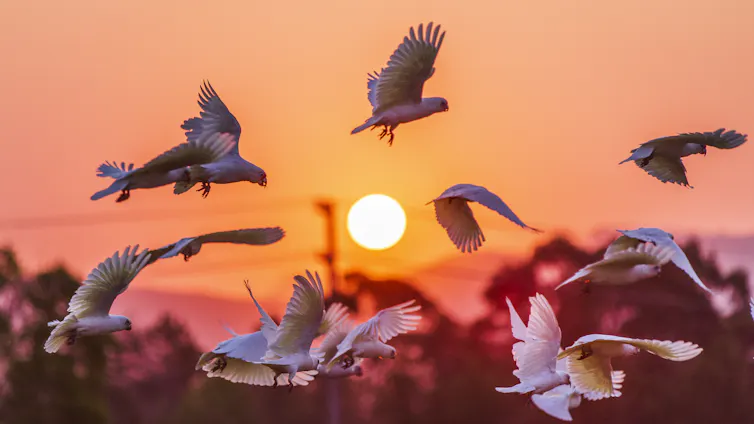
cockatoo flock flying at sunset.
Philip Thurston/Getty, CC BY
John Woinarski, Charles Darwin University; Euan Ritchie, Deakin University, and Stephen Garnett, Charles Darwin University

The deadly H5N1 strain of bird flu has now spread from migratory birds to infect resident Australian birds. Clusters of dead birds have been found in several locations. The virus will inevitably infect other wildlife, most notably mammals.

Death rates range from 75-100% in poultry and some wild bird species. There’s great uncertainty about how big the death toll will be over both the short and long-term. Native species such as the black swan are highly vulnerable, while others may prove more resilient.

Based on overseas experience, we can expect many thousands, if not millions, of Australian birds, and large numbers of mammals, to perish. Poultry will likely become infected, while some beloved pets may die.

Overall, the populations of many Australian species will likely plummet. Some threatened species will move closer to extinction, and relatively safe species could become threatened. As the virus spreads through widespread species such as silver gulls, white ibis, pigeons, ducks and crows, many of us will be confronted by wildlife deaths close to home.

Facing a threat like this can make us feel powerless. But there are actions we can take.


Blow after blow for wildlife

Over the 2019-20 summer, megafires incinerated forests and wildlife. In 2025, the lethal South Australian algal bloom denuded large marine areas.

The prospect of yet another hammer blow to wildlife is haunting and emotionally triggering for conservationists, wildlife carers and people who love nature.

To date, the official messaging asks us to watch for, report and record sick birds and mammals. This is important, but it risks leaving the community feeling disempowered witnesses to catastrophe. The situation is far from hopeless. Now is the time to act.

What can be done?

Following overseas work on ways to reduce the toll, we have come up with eight actions.

1. Tackle other threats to give species a fighting chance

While federal, state and territory response plans are not public, what we do know suggests a focus on controlling threats other than bird flu, especially for species that are threatened.

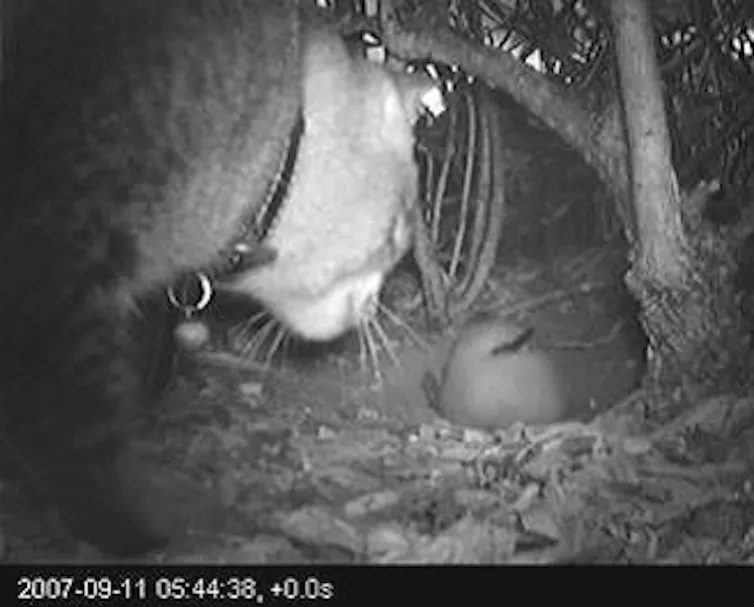
For example, locally eradicating predators such as cats and foxes could give more individuals a chance to get through the first wave of bird flu. Banning duck hunting could also reduce one threat to wildlife.

Working to reduce other threats such as feral cats will boost resilience to the virus at a species level. Pictured: a cat stalking a red-tailed tropic-bird chick on Christmas Island. Janos Hennicke, CC BY

2. Secure insurance populations

Threatened birds and mammals with populations in captivity provide some security. We can boost these insurance populations by increasing their genetic diversity and the number of individuals kept.

For at-risk species without these populations, we may have to collect wild animals before infection reaches them (where practical). Zoos may offer the most protection, but there’s scope to translocate species (such as northern quolls) to safer wild places.

3. Vaccinate species at risk

New Zealand authorities are already giving vaccines to birds at risk. To date, Australia is not doing so, though policymakers are exploring the option. Limited trials in mammals have been undertaken in the United States.

Wild animals have to be caught, given the vaccine, and recaptured for a booster 4-6 weeks later. This is challenging but often feasible. In the US, authorities captured and vaccinated endangered Californian condors, then released them back to the wild.

We need to explore new vaccines, especially for mammals.

4. Widen monitoring

We need good monitoring to track the spread, understand whether our efforts have helped and plan future actions. Monitoring will show what the virus has done to species, track viral mutations and assess survival rates.

For many seabirds and waterbirds, existing programs give us good estimates of current population size. This will let us estimate declines and any recoveries. But we don’t have robust estimates for other at-risk bird and mammal species. This gap needs to be rapidly filled with funding for targeted monitoring. Citizen scientists can also help.

Citizen scientists can play a key role in monitoring population declines and – hopefully – recovery through platforms such as iNaturalist and Birdata. Renee Mead, CC BY

5. Expand research

Much Australian fauna is very distinct from species overseas, meaning lessons learned elsewhere won’t necessarily apply. We need to know which species are most vulnerable, which species spread the virus most effectively, whether survivors have compromised immune systems and how much genetic diversity has been lost.

6. Slow the spread

The virus spreads rapidly in contaminated water and through the movements of infected birds and mammals. Even so, we can slow the spread. In some situations, authorities can remove sick or dead animals to reduce the chance of scavenging birds and animals eating them and contracting then spreading the virus.

Some areas may need to be closed to the public to reduce infection risks through disturbance or contamination. It may be necessary to shut down some water sources or make them less attractive to waterfowl, who are often good carriers of the virus. Poultry farmers will need to control water sources too, to avoid attracting infected birds.

7. Involve interested groups

Authorities must ensure community members, land-owners, First Nations groups and conservationists are involved in creating response plans. Bird flu is a shared problem. Governments cannot respond alone.

8. Look for some silver linings

This virus will likely have dire consequences for many species. But it could also kill introduced predators and scavengers such as feral pigs, cats, foxes and common mynahs.

Time to act

The damage this virus will do isn’t set. We can shape some outcomes. We believe this package of actions could help avert the worst future for Australian birds and mammals – and encourage their recovery.

Acknowledgements: Ecologist Tanya Loos provided helpful feedback.

The Conversation

John Woinarski, Professor of Conservation Biology, Charles Darwin University; Euan Ritchie, Professor in Wildlife Ecology and Conservation, School of Life & Environmental Sciences, Deakin University, and Stephen Garnett, Professor of Conservation and Sustainable Livelihoods, Charles Darwin University

This article is republished from The Conversation under a Creative Commons license. Read the original article.